Branding
Choosing an Art Direction Agency: Services, Brief and Results


Key takeaways
- A good art direction agency doesn't deliver individual nice images, but a set of rules made of stance, moodboards, image rules and a guide that your team can apply without the agency
- The best quality test is the guide test: a person who doesn't know the project should be able to brief a production using only the guide
- In the portfolio, consistency across several productions and channels counts, not the quality of a single image
- For externally booked art direction there is no reliable market range; the only documented figures are an hourly rate of about €129 at creative agencies (Statista citing Inverto, 2015) and a median of €57,071 gross per year for employed art directors (Gehalt.de)
- Usage rights to the images and the guide should be settled in writing before the project starts (Section 31(5) of the German Copyright Act, UrhG)
By Edip Kilinc, founder of Webwavers. Published October 31, 2026. Last updated October 31, 2026. Reading time: about 15 minutes.
Short answer: A good art direction agency defines how your brand presents itself visually and gives you a set of rules your team can work with afterward, without the agency. You can spot one by four things: a reasoned visual stance, several moodboard directions to choose from, a guide with examples plus do's and don'ts, and an onboarding session for your team and suppliers. In the portfolio, what counts is whether images fit together across several productions, not whether a single photo impresses.
The key points
- Art direction means steering the visual world, not producing images. Check whether the agency delivers rules, not just motifs.
- Ask for a sample guide and at least one case study in which an image style stayed consistent across several productions.
- Use the guide test to check quality: can a stranger brief a photographer with it?
- For externally booked art direction there is no reliable market range. Compare quotes by deliverables, not by total price.
- Settle usage rights, ownership of the guide and the agency's role after the project before the contract starts.
Contents
- What an art direction agency does
- Which types of providers exist
- Deliverables at a glance
- Your brief: what the agency needs from you
- Checking the portfolio: consistency over single images
- The guide test
- A consistent visual language for your website and campaigns
- Two industry cases: manufacturing and law firms
- Questions for the first call
- Warning signs
- Costs and comparing quotes
- Rights, ownership and the time after the project
- When you don't need an agency
- How we do it
- FAQ
What an art direction agency does
Art direction answers one question: What does our brand look like when it isn't in the logo, but in photos, layouts, graphics and campaigns? A corporate design covers logo, colors and typeface. It rarely covers what a team photo looks like, from which angle a product is photographed or how a campaign page is built. Art direction fills exactly that gap.
An art direction agency typically works in four steps:
- Define the stance. What impression should the brand make visually, and what does it set itself apart from?
- Develop directions. Several moodboards show how the brand could look. You choose one direction.
- Work out the rules. The chosen direction becomes guiding principles for imagery, layout and graphics, separated by channel.
- Hand over and support. A guide documents the rules. The agency onboards your team and, if you want, reviews ongoing productions.
The difference from other roles matters, because otherwise quotes can't be compared. A photographer produces images. A branding agency develops name, logo and brand system, as described in the article Brand system, not just a logo. A content production team shoots photo and film. Art direction sits in between and makes sure all three speak the same language. Why visual language is more than taste is explained in the article Brand imagery in a company. Whether you need an agency or a good photographer for this is covered in the guide Art direction or freelance photographer. This guide is about how to find the right agency once you've decided on external art direction.
Which types of providers exist
Providers who offer "art direction" come from different backgrounds. That shapes what you get.
| Provider type | Strength | Typical limit | Fits |
|---|---|---|---|
| Specialized art direction studio | Depth in visual language, photography direction, campaigns | Often no web, no translation into layouts and templates | Brands with a strong focus on imagery and campaigns |
| Branding agency | Brand system and art direction from one source | Image production usually external, web know-how varies | Rebrandings, brands in transition |
| Creative or advertising agency (full service) | Campaigns, production and media planning together | Art direction is one building block among many, teams change | Large campaigns with many stakeholders |
| Web agency with art direction | Visual language translated directly into website, components and templates | Print, trade fairs and film thinner, depending on the agency | Relaunch, website as the lead channel |
| In-house art direction | Permanent presence, deep brand knowledge | Setup, cost, dependence on one person | Permanently high demand for productions |
The question of "studio or agency" has no one-size-fits-all answer. A studio is often the right choice when visual language and photography direction are at the center. An agency with a broader range of services is better when the rules should feed directly into your website, social media templates and print layouts. More important than the label is what the quote lists as a deliverable.
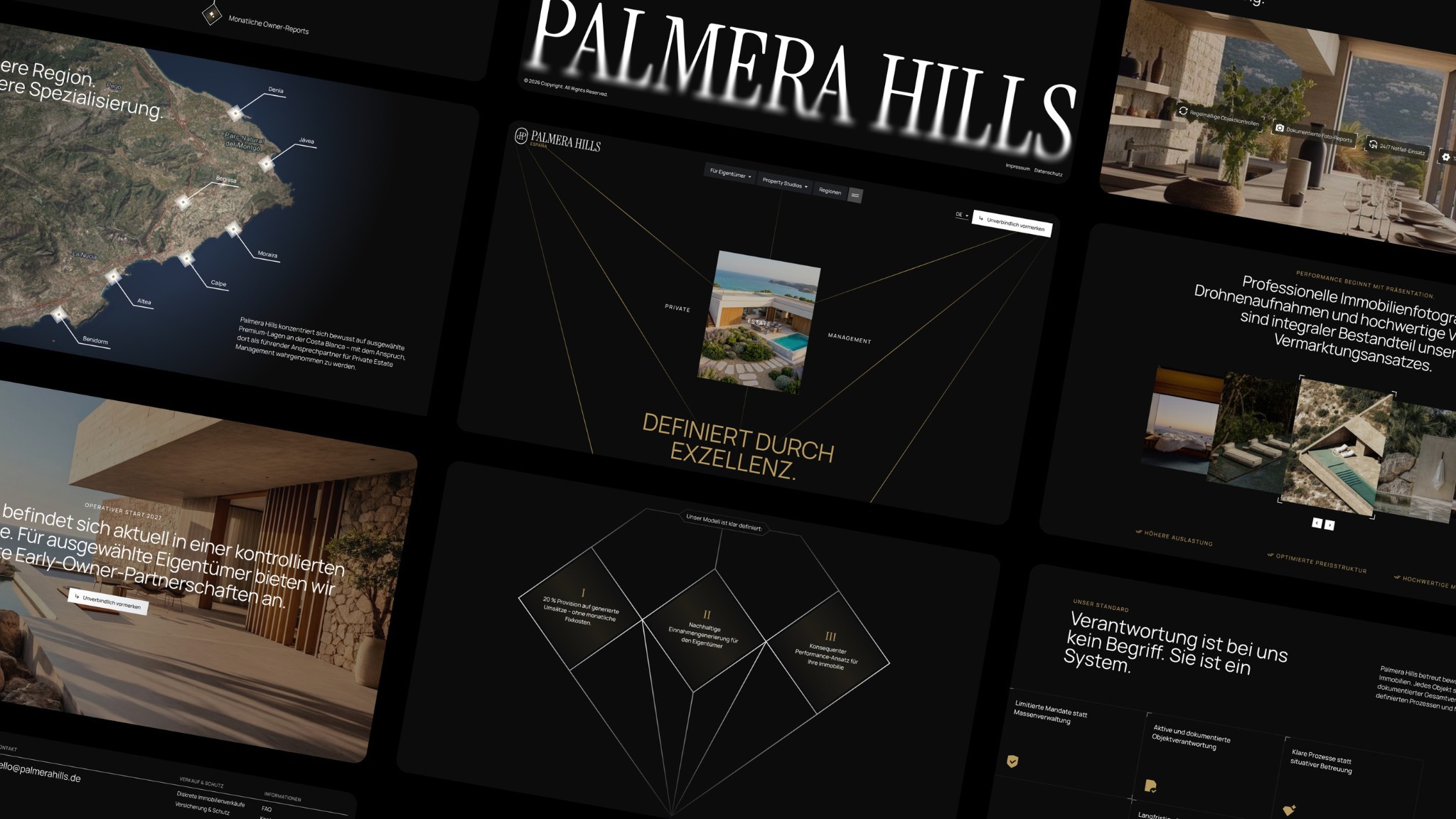
Deliverables at a glance
A quote for art direction is only comparable if it names concrete results. This table shows what you can expect and how to check it.
| Deliverable | What it should be | How you recognize quality | Question for the agency |
|---|---|---|---|
| Visual stance | Short document on impression, tonality, differentiation | Reasoned, with reference to competitors and target audience | How do you derive the stance from our positioning? |
| Moodboards | Several distinct directions with reasoning | Real alternatives instead of variants of the same idea | How many directions do you show, and how do they differ? |
| Image rules | Motifs, perspective, light, color, taboos | Concrete enough for a photographer to work from | Show me a rules page from a previous guide |
| Layout and graphics | Grid, hierarchy, illustration and icon style | Examples for web, social, print | How do you translate the rules into templates? |
| Campaign looks | Framework for campaigns that belong to the brand | A clear "this may vary, this never does" | What is fixed with you, what is flexible? |
| Brief for productions | Template for photographers, agencies, print shops | Contains shot list logic and reference images | How do we brief in the future without you? |
| Guide with examples | Rules with do's and don'ts per channel | Good and bad examples side by side | How is the guide maintained? |
| Onboarding and review | Team training, review of ongoing productions | Review rounds named in the contract | How many review rounds are included? |
You can use the table as a checklist for any quote, whichever agency it comes from.
Your brief: what the agency needs from you
A good result depends half on the brief. The clearer you are, the fewer rounds you need. Prepare these points:
- Brand goal and friction points. Where does your presence diverge today? Typical examples: the website looks different from the trade fair booth, social posts look like they come from another company.
- Target audience and their questions. Who should see the images, and what should they understand or do afterward?
- Channels. Website, social media, print, presentations, trade fairs, recruiting. One owner per channel.
- Existing assets that should stay. Logo, corporate design, image material, templates. What is fixed, what may change?
- References. Two to three visual worlds you like, and at least one you don't want.
- Upcoming productions. Shoots, campaigns and trade fairs in the next twelve months, so the guide becomes practical.
- Decision makers. Who signs off? More than two approvers per phase almost always cost time.
- Framework. Rough budget and time window. Even a range helps the agency estimate the scope.
If you need a detailed website brief, the article Website brief gives you orientation. The same logic applies to art direction: it's better to say early what is non-negotiable than to correct later.
Checking the portfolio: consistency over single images
An art direction portfolio can be deceptive. Single images are easy to stage. What is hard is keeping a style stable over months and across several people. This is what to look for.
Check at least two case studies for these points:
- Several productions. Does the case study show images from at least two shoots or campaigns that fit together?
- Several channels. Do you see the same style on the website, in social media and in print?
- Visible rules. Is there an excerpt from the guide with do's and don'ts?
- The agency's role. Did it take the photos itself, brief the production or only deliver a concept? The difference is big.
- Decisions explained. Why this light, this perspective, this background?
- Time horizon. Is the project more than a quarter old, and does the style still hold?
- Limits. What would the agency do differently in hindsight?
Keep in mind that many clients are not allowed to publish details. In that case the agency can show in conversation how it documents rules, even if the actual client material stays under wraps. A simple pattern works as a yardstick: show me how logo, typography, colors and imagery interlock, and where the rules for that are documented.
A note on awards in the portfolio: they say something about design quality at a point in time, but little about consistency over the years. How to put them in context is explained in the guide Design awards when choosing an agency.
The guide test
The guide is the most important deliverable because it stays when the agency leaves. A simple test lets you check it before signing the contract, using a sample guide the agency shows you, and after handover, using your own.
How the test works:
- Give the guide to a person who doesn't know the project, for example a colleague from another department.
- Ask them to brief a shoot: five motifs, perspective, light, background, taboos.
- Have them assess five existing images of the company: fits, doesn't fit, and why.
- Check whether they get by without asking the agency anything.
If the guide fails the test, one of three things is usually missing: concrete examples, clear taboos or a separation between "fixed" and "flexible". The Nielsen Norman Group's eye-tracking research offers an argument for why the effort pays off. Users ignore generic stock photos of models and notice photos of real people and content. At FreshBooks, they spent roughly 10% more time on the portraits than on the biographies next to them, even though the biographies took up 316% more space (NN/g, Photos as Web Content, 2010). A guide that specifies real motifs and rules out a stock look starts exactly there.
A consistent visual language for your website and campaigns
If you're a marketing team or head of communications looking for a consistent visual language for your website and campaigns, three things are decisive that quotes often leave out.
Roles and approvals. Who decides whether an image fits the brand? A guide without an approval process gets ignored after three months. Define who reviews, by which criteria and within what timeframe. The agency should give you a template for this.
Templates, not just rules. Rules are abstract. Templates for social posts, campaign pages, presentation slides and ads make them usable. Ask whether the agency delivers layout templates or only descriptions. A web agency can translate rules into website components. How that works with design systems is described in the guide Design systems: Figma to Webflow handoff. The design system glossary entry covers the basics.
Flexibility for campaigns. Campaigns need room to move. A good guide names what stays the same in every campaign (for example light, image crop, color world) and what may change (motif, slogan, format). Without this separation, the brand either freezes or frays.
You should also check whether the agency thinks about content production too. If you want photo and film from one source, you'll find pointers in the guide Content production: agency, freelancer or in-house and on the Content production page.
Two industry cases: manufacturing and law firms
The requirements for art direction differ by industry. Two cases show what matters.
Manufacturing: the brief for productions
Industrial companies produce images for many occasions: product shots, assembly, plants on site, trade fair appearances, recruiting. Often different people photograph at different locations. The risk is an image library that looks as if it came from several companies.
Here it pays to ask the agency specifically about the brief for productions. A good industrial brief contains:
- Perspective, distance and scale reference for products and plants
- Background and what may stay in the image (production hall, studio, neutral)
- Light and color temperature, so images from different years fit together
- Rules for people in the image: role, clothing, safety requirements
- Things to avoid, such as staged handshakes or retouching that falsifies surfaces
Ask the agency whether it has experience with technical subjects and how it plans for safety requirements and access restrictions on site. More on the industry is on the Industry and engineering page.
Law firms and consultancies: people as the product
For law firms, tax advisories and consultancies, there is little product to show. The image is the team, the firm, the working situation. The risk lies in a stock look and in inconsistent portraits when partners are photographed one after another on their own initiative.
Here the agency should deliver clear rules for portraits: background, crop, gaze direction, clothing, degree of retouching. On top of that come images of working situations that look authentic without being staged. And you need a process for new employees, so that portraits still match the rest in two years. You'll find more context in the article Branding for professional services and on the Consulting and agencies page.
Questions for the first call
The first call shows whether the agency has a process or just makes an impression. Ask these questions:
- What results do we get after each phase, and what do they look like?
- Show us a sample guide, anonymized if need be. How many pages, which chapters?
- How many moodboard directions do you show, and how exactly do they differ?
- How do we brief photographers and suppliers in the future, when we no longer book you?
- How many review rounds are included, and what does each additional one cost?
- Who from your team works on our project, and who is my contact?
- How do you handle existing images that should stay?
- Which rights to the guide, moodboards and images do we get?
- Roughly how long does the project take, and what typically delays it?
- What happens if we no longer like the chosen direction later?
Good agencies answer concretely and show examples. Answers like "That's individual for every project" are fine if an example follows.
Warning signs
- Only single images in the portfolio. No case study shows how a style holds across several productions.
- One moodboard. An agency that shows only one direction has made the decision for you before you could make it.
- Rules without examples. "Natural light" is not a rule a photographer can implement.
- No statement on usage rights. If it's missing, a dispute after the project is likely.
Costs and comparing quotes
For externally booked art direction at mid-sized companies, there is no reliable, independent market range. The scope varies between a short concept for one campaign and a set of rules for several brands and channels. A flat figure without a scope would be a guess.
These reference points are documented:
- Hourly rates at creative agencies. An older survey puts the average for art direction at creative agencies at about €129 per hour (Statista citing Inverto, 2015). The figure is more than ten years old and should only be read as a rough guide. Tricks.de puts the average for advertising agencies at about €120 per hour (Tricks.de, 2026). The website cost report from adfera gives €80 to €120 per hour for web agencies (adfera, 2026).
- In-house as a benchmark. For employed art directors, Gehalt.de gives a median of €57,071 gross per year, with the middle 50% between €51,366 and €63,409 (Gehalt.de). Employer contributions and incidental costs come on top.
A simple calculation follows from this. At €129 per hour, €57,071 corresponds to roughly 442 hours of external art direction (57,071 divided by 129, without employer contributions and without accounting for the fact that an employee doesn't spend all hours productively on your work). This shows that a clearly scoped concept project is often cheaper externally than a hire. With permanently high demand, the in-house role becomes more attractive. This calculation is a rule of thumb, not a quote.
How to compare quotes:
- Ask for a breakdown by phase and deliverable, not just a total.
- Ask about included review rounds and the price of each additional one.
- Clarify whether moodboard directions, templates and onboarding are included.
- Ask whether production support, such as attending the shoot day, is included in the price.
- Check whether image production (photographer, locations, models) is included or billed separately. That is the most common reason for price differences.
General tips on reading quotes are in the guide Comparing web agency quotes.
Rights, ownership and the time after the project
Three legal topics decide whether your guide stays usable later.
Usage rights to images. Copyright initially lies with whoever creates the image. Which uses you receive depends on the contract. If nothing specific is agreed, the shared purpose of the contract decides under Section 31(5) of the German Copyright Act, UrhG (Gesetze im Internet, § 31 UrhG). What was agreed for the website does not automatically cover print, trade fairs or ads. More on this is in the guide Usage rights for photo and film in companies.
Ownership of the guide. Clarify whether you receive the document and all source files (layouts, templates, moodboards) and whether you may change them internally. A guide that only the agency can maintain isn't a set of rules, it's a dependency.
Role after the project. Agree in writing whether and how the agency reviews ongoing productions on request.
When you don't need an agency
External art direction isn't always the right answer.
- A single shoot with a suitable photographer. Then a good brief is enough, plus the guide Art direction or freelance photographer.
- A brand that isn't established yet. If name, positioning and logo are still open, branding comes first. The guide Branding agency, freelancer or in-house helps here.
- A strong in-house team. Then selective support is often enough.
- No budget for implementation. A guide nobody applies, because no productions are planned, achieves little.

How we do it
Webwavers is a premium agency for branding, web design and web development and offers art direction as a service of its own. According to the service page, this includes three moodboard directions, a guide with examples plus do's and don'ts, and an onboarding session for the team and suppliers. How we set up projects in general is on the Process page: a non-binding first call, onboarding with 34 strategy questions, three moodboards to choose from, a fixed project lead, a dedicated Slack channel per client and one feedback round per milestone. Nothing moves forward without your sign-off. You can ask us the questions from this guide just as you would any other agency.
FAQ
Which agency is the best for art direction?
There is no single best agency. The right one depends on whether you need visual language and photography direction, a brand system, campaigns or the translation into website and templates. Check case studies with several productions, ask to see a sample guide and apply the guide test. Only then are quotes comparable.
Which agencies also handle art direction and visual language in a relaunch?
Mainly branding agencies and web agencies with a design focus. Ask in the call whether visual language appears in the quote as a deliverable of its own and whether it is translated into website components. A relaunch without image rules often leads to new pages being filled with old images.
Who delivers a guide and onboards our team?
Almost every agency delivers a document, but not every one onboards your team. Explicitly ask for a guide with examples plus do's and don'ts per channel and an onboarding session for the team and suppliers in the quote. Check the guide with the guide test from this page before you accept it.
What does art direction cost?
For externally booked art direction at mid-sized companies, there is no reliable market range. The only documented reference points are an average of about €129 per hour at creative agencies (Statista citing Inverto, 2015) and a median of €57,071 gross per year for employed art directors (Gehalt.de). Compare quotes by deliverables.
Do I need art direction if we already have a corporate design?
Often yes, because a corporate design rarely covers photos, campaign looks and how the brand comes across in media. If logo, colors and typeface are clean but images and layouts look different depending on the channel, art direction is the missing layer. More on brand guides is in the glossary under Brand guide.
Conclusion
You recognize an art direction agency by what remains when it's finished: a set of rules your team can apply without it. Check stance, moodboards, image rules, guide and onboarding individually, look for consistency across several productions in the portfolio and apply the guide test. Settle rights and roles before the start and compare quotes by deliverables. Then you get a visual language that still holds in two years.
Support with visual language and art direction: On the Art direction page you can see what we deliver. Get in touch via Contact if you want to walk through your case.
Sources
- Nielsen Norman Group: Photos as Web Content (Eye-Tracking, 2010)
- Gehalt.de: Art Director, Gehalt in Deutschland (Art director salary in Germany)
- Statista: Durchschnittliche Stundensätze in Kreativagenturen in Deutschland (Average hourly rates at creative agencies in Germany, 2015)
- Tricks.de: Website-Agentur Kosten und Preise (Web agency costs and prices, 2026)
- adfera: Website-Kosten-Report 2026 (Website cost report 2026)
- Gesetze im Internet: § 31 UrhG, Einräumung von Nutzungsrechten (Granting of usage rights)
- Webwavers: Process
- Webwavers: Art Direction
More guides
All guides
PHP2Shell: Is your TYPO3 or WordPress website affected? What you need to do now
Oct 21, 2026
Read more



Branding Agency, Freelancer or In-House: What Pays Off for Mid-Sized Companies?
Oct 31, 2026
Read more


GEO for B2B Industries: How Expert Content Gets Cited in ChatGPT and Perplexity
Oct 31, 2026
Read more


Wix, Squarespace, Jimdo or Webflow: Which Platform Can Carry a Company Website?
Oct 31, 2026
Read more