Branding
Usage Rights for Photo and Film: What Companies Should Document


Key takeaways
- Copyright stays with the author, you acquire usage rights, and without an explicit agreement their scope follows the purpose of the contract (§ 31 para. 5 UrhG)
- For each asset, document author, type of use, medium, territory, duration, editing, transfer and credit
- A chain of rights between photographer, agency and you only works if every link holds the rights it passes on (§§ 34, 35 UrhG)
- For people in the image you need consent, ideally in writing in an employment setting, and under the GDPR (DSGVO) that consent can be withdrawn
- This guide is not legal advice, and for high-volume contracts or disputes you should ask a lawyer
Author: Edip Kilinc, founder of Webwavers. Published: October 31, 2026. Last updated: October 31, 2026. Reading time: about 13 minutes.
Note: This guide explains the basics and is not legal advice. Laws and case law change, and every contract has its own details. For high-volume contracts, disputes or any uncertainty, talk to a lawyer who specializes in copyright and media law.
The Key Points
When you have photo or film produced for your company, you usually do not buy the copyright. You buy usage rights. Copyright stays with the person who created the work and, under § 29 para. 1 UrhG, generally cannot be transferred. The contract has to state exactly what use you get: for what, where, for how long, in which medium and with which changes. If that is not regulated, the purpose of the contract decides, and that is rarely what you had in mind.
- Document the rights per asset, not just per project.
- Before production, ask about types of use, not whether "all rights" are included. In practice, that term is vague.
- People in the image need to consent. In an employment setting, the consent should be in writing before the shoot.
- Music, fonts, locations and third-party brands are separate legal topics.
- A rights table with expiry dates saves you trouble when material is still running years later.
Contents
- Author, usage right, file: three things, not one
- The provisions at a glance: UrhG §§ 31 ff.
- Photo and film: differences in the chain of rights
- The rights table: what you record per asset
- Channels: where your material should run
- People in the image: team, apprentices, customers
- Music, fonts, locations, stock material
- Compensation and buy-out
- What belongs in the contract
- Ten questions for agencies and production companies
- When you do not need an agency
- Frequently asked questions
Author, usage right, file: three things, not one
Three terms constantly get mixed up:
- Copyright. The right of the person who took a photo or made a film. Photographic works and film works are protected as personal intellectual creations (§ 2 UrhG). Copyright cannot be transferred, except by inheritance (§ 29 UrhG).
- Usage right. The permission to use the work in a particular way. The author grants you this right. It can be non-exclusive or exclusive and can be limited in time, territory or content (§ 31 UrhG).
- The file. Having received a photo or a video does not mean you may use it everywhere. Ownership of the file and the usage right are different things.
Even simple photos without particular creative merit are protected. Under § 72 UrhG, photographs and similarly produced items are protected for 50 years after publication or, if they are not published, after production. So even an employee's phone photo is not free of rights. Pictures taken within an employment relationship are a special case: the copyright provisions also apply to works created in fulfillment of duties under an employment or service relationship, unless the content or nature of that relationship says otherwise (§ 43 UrhG). What an employed photographer leaves to your company is best regulated in the employment contract or in a supplementary agreement.
The provisions at a glance: UrhG §§ 31 ff.
These are the provisions that affect companies most often. The table summarizes them and is not legal advice:
| Provision | Content (summarized) | What it means for you |
|---|---|---|
| § 31 para. 1 UrhG | The author can grant usage rights for individual or all types of use, non-exclusive or exclusive, limited in time, territory or content | Have medium, territory, duration and exclusivity named separately |
| § 31 paras. 2 and 3 UrhG | Non-exclusive right: others may keep using the work. Exclusive right: use to the exclusion of everyone else, including the author, unless agreed otherwise | If you need exclusivity (a competitor should not use the same photo), it has to be stated explicitly in the contract |
| § 31 para. 5 UrhG | If the types of use are not individually named, the scope follows the purpose of the contract that both sides assumed | Avoid open formulas, write down the types of use |
| § 31a UrhG | Contracts on rights for unknown types of use require written form; the author can withdraw | Blanket "for all future types of use" clauses are risky |
| § 32 UrhG | Right to the agreed or, failing that, an appropriate remuneration | Extremely low flat fees can be renegotiated |
| § 34 UrhG | Usage rights may be transferred only with the author's consent (good faith applies), with an exception for the sale of a business | If you want to pass rights on to subsidiaries or partners, regulate it beforehand |
| § 35 UrhG | The holder of an exclusive right may grant further usage rights only with the author's consent | Sublicenses (dealers, franchise, press) need permission |
| § 13 UrhG | Right to recognition of authorship; the author decides whether and how they are credited | Clarify in advance: credit yes or no, where, in what form |
| § 97 UrhG | For unlawful use, a claim to removal and cessation, and, if fault is involved, damages (para. 2) | Anyone who uses without the right risks claims |
Two things stand out. First: the purpose-of-transfer principle in § 31 para. 5 is the counterweight to the habit of agreeing "all rights". If the types of use are not individually named, the scope follows the purpose both sides assumed. If the agency photographed for the website and nothing else was agreed, the purpose is initially the website. Whether print, trade fairs and ads are also allowed then becomes a question of interpretation. Second: the legislator protects the author on remuneration. Under § 32 the author is entitled to appropriate remuneration and can demand an adjustment if a flat fee is too low.
Photo and film: differences in the chain of rights
Photo. Here the right lies with the photographer as the creator of the photograph (§ 72 para. 2 UrhG). If you hire an agency and the agency hires a photographer, the chain runs: photographer, agency, you. The agency can only pass on rights it holds itself. So ask about the contractual relationship between the agency and the photographer, not just about the rights you receive. You can find more on how art direction and photography work together in the guide Art Direction or Photographer.
Film. Films often involve many people: director, camera, editing, voice talent, music. The law contains rules on the grant of rights to the film producer. Anyone who commits to contributing to a film and thereby becomes an author of the film work grants the film producer, in case of doubt, the exclusive right to exploit the film work in all types of use (§ 89 UrhG). Copyrights in works used for the film, such as the screenplay or film music, remain unaffected. That is why music in a film is a rights problem of its own, which you clarify separately. For the filming of an existing work, § 88 UrhG also applies.
Who is the "film producer"? That is usually the production company. It grants you the usage rights by contract. Ask whether it, in turn, has the necessary rights from everyone involved.
The rights table: what you record per asset
Do not document rights in emails. Use a table that anyone in marketing can find. For each photo, film or clip, record:
| Field | Example | Why |
|---|---|---|
| Asset ID and file name | FOTO-2026-014, team-werkstatt.jpg | Unambiguous assignment |
| Author (name, company) | Name of the photographer, production company | Who holds the right, who is the contact |
| Contract and date | Quote/contract no., date | Evidence in a dispute |
| Type of use | Publication, reproduction, editing, public communication | Concrete rights instead of "all" |
| Medium and channel | Website, social media, print, trade fair, ads, press | Each channel separately |
| Territory | Germany, EU, worldwide | Online is not automatically allowed worldwide |
| Duration | unlimited, 2 years, until date | Note the expiry in the calendar |
| Exclusivity | non-exclusive or exclusive | Who else may use it |
| Editing | Cropping, color adjustment, retouching, excerpts from the film | Otherwise an editing question looms |
| Sublicense / transfer | Dealers, partners, subsidiaries, press | See §§ 34 and 35 UrhG |
| Credit | yes, where and how / no | § 13 UrhG |
| People in the image | Name, consent dated, withdrawal yes/no | Prove the consents |
| Third-party works | Music, font, logo, artwork, location | Separate licenses needed |
| Expiry date / follow-up | Date | Decide actively whether to renew |
If you fill in only two rows per asset, that is already better than none. Store the table together with the files, in the media library or the file system, so it can be found at the next relaunch.
Channels: where your material should run
Most conflicts arise because a photo is produced "for the website" and later used in an ad. So go through the channels before production:
| Channel | Typical question | Practical note |
|---|---|---|
| Own website | Subpages, landing pages, language versions too? | Write down all pages and languages |
| Social media | Organic only or also as a paid ad? | Regulate paid use separately |
| Ads (online, print) | What term, which regions? | Usually its own line item in the quote |
| Print, trade fair, sales | Brochure, roll-up, trade fair wall, presentations? | Name print run and duration |
| Press | May media print the images? | File press images with a rights notice |
| Partners and dealers | May they use the images? | Transfer under §§ 34, 35 UrhG |
| Recruiting, careers | Apprentice film, recruiting clips | Consents of the people shown, separately |
| Internal communication | Intranet, training | Often forgotten, but legally its own use |
This breakdown is a practical aid, not a fixed legal category. Which types of use the law recognizes and how far they reach is, in case of doubt, a matter of interpretation and depends on the individual case.
People in the image: team, apprentices, customers
The rights of the people photographed are a second area alongside copyright. Under § 22 KUG (the German Art Copyright Act), portraits may be distributed or publicly displayed only with the consent of the person depicted. If the person depicted received payment for being depicted, consent is presumed in case of doubt. On top of that comes the General Data Protection Regulation (GDPR, DSGVO): images of people are personal data, and under Art. 7 para. 3 GDPR a consent can be withdrawn at any time (GDPR on EUR-Lex). How the KUG and the GDPR interact in an individual case is disputed, so plan cautiously and get advice if you are unsure.
Employees. On February 19, 2015 (case no. 8 AZR 1011/13), the Federal Labor Court (BAG) decided: an employee's consent to the publication of video recordings for advertising must be given in writing. In that case it had been obtained in writing and did not expire automatically when the employment ended. It could be withdrawn only for a comprehensible reason. The mere end of the employment is not enough for that (Osborne Clarke on the BAG ruling). The ruling dates from before the GDPR. Today you should still word the consent carefully: for what, how long, on which channels, and with a note on withdrawal.
Apprentices and minors. For people under 18, we recommend as a matter of practice that you also get the parents' consent. What that looks like for an apprentice film is described on the page Careers Page for Trades Businesses.
Customers and visitors. Anyone who is recognizable in the image at a shoot without being part of the project needs to consent or must be taken out of the image. That applies to customers in stores just as it does to license plates in parking lots.
Form. A good consent names: project and purpose, channels, duration, credit, a note on withdrawal and a contact person. Signature and date belong on it.
Music, fonts, locations, stock material
Even if photo and film are fine, the material often contains third-party rights:
- Music. Background music in a film is a licensing question of its own. The law makes clear that copyrights in works used for the film, such as film music, remain unaffected (§ 89 para. 3 UrhG). Ask for a written license that fits the channels and the term of your film.
- Fonts and graphics. Fonts and graphics in the image also carry licenses. Ask whether the production used licensed material.
- Locations and artworks. Rooms, facades and artworks in the image can touch on rights of their own. For special places, get permission.
- Third-party brands. Clearly recognizable third-party logos on vehicles or machines are a topic of their own.
- Stock material. Read the license terms: where may it run, for how long, in what print run, with which changes? Stock images with people are not automatically cleared for every use.
The consequence of unclarified use is legally clear: the injured party can demand removal and cessation and, if fault is involved, damages (§ 97 UrhG). How high claims turn out in an individual case depends on the circumstances, so we do not name amounts.
Compensation and buy-out
Two models are common on price: either you pay a fee for production plus use within a defined scope, or you agree a buy-out with far-reaching rights for a higher flat fee. Both are permitted. What matters is that the remuneration fits the scope of use, because the law protects authors against inappropriately low flat fees (§ 32 UrhG). A flat fee must therefore ensure an appropriate share in the expected overall revenue and be justified by industry standards.
What you should clarify in practice:
- Is the use limited in time, and what does an extension cost?
- What does extending to further channels cost (for example from website to ads)?
- Are edits and derivatives (excerpts, social cuts, subtitle versions) included in the price?
- Who bears the costs for music and third-party licenses?
There are no reliable, independent ranges for usage rights that transfer across industries. Have production and usage itemized separately in every quote.
What belongs in the contract
A checklist for an order or framework agreement with a photographer, production company or agency:
- Contracting parties and contact persons.
- Exact description of the service (number of motifs, shooting days, delivery formats).
- Types of use, media and channels named individually (see the rights table).
- Territory and duration of use.
- Non-exclusive or exclusive right.
- Editing rights, including for excerpts, subtitles, language versions.
- Provisions on sublicenses and transfer to third parties.
- Credit.
- Rights to raw material and source files: do you receive them, and if so, with which rights?
- Consents of the people shown and who obtains them.
- Third-party licenses (music, fonts, locations) and who pays for them.
- Remuneration, itemized by production and use, terms for extension and expansion.
- Assurance that the contractor holds the rights they grant.
- Provision for the sale of a business or restructuring (§ 34 UrhG).
And a reminder: without explicit naming of the individual types of use, the scope follows the purpose of the contract (§ 31 para. 5 UrhG). Write down what you need.
Ten questions for agencies and production companies
If you are looking for a provider that delivers photo and film content with properly documented rights, this list helps in the conversation:
| Question | Good sign |
|---|---|
| Will I get a written rights overview per motif or film? | Yes, as a table or an appendix to the contract |
| How are the rights regulated between you and the photographer or camera operator? | There are contracts with the contributors |
| Which channels are included in the quote, which cost extra? | A clear list |
| How long does the use last, how does renewal work? | Fixed term or buy-out, both transparent |
| May we have images edited and cropped? | Editing is regulated |
| Who obtains the consents of the people shown? | A standard form is supplied |
| What about music and third-party material? | License proof is available |
| Will we receive raw material and project files, and with which rights? | A clear answer instead of evasion |
| May partners and dealers use the images? | Transfer is regulated |
| What happens if a person shown withdraws consent? | There is a process, for example replacement or a cut |
Be wary of answers like "all rights are included" without a list. It sounds good, but without documentation you do not know what it means. That applies to every provider, including us.
How we do it
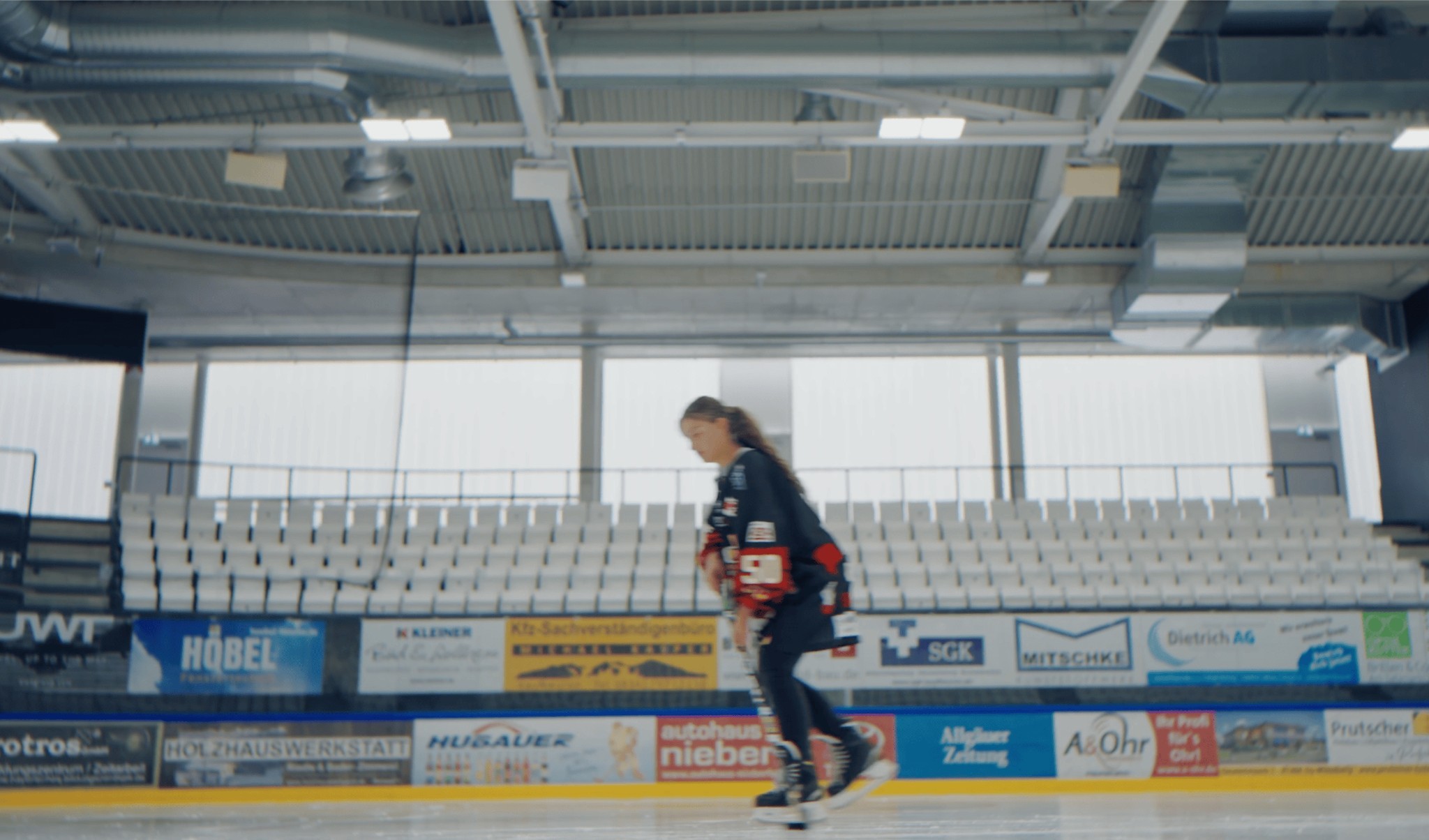
Webwavers is a branding and web design agency and one of seven Webflow Premium Partners in Germany. Photo and film are part of our content production services, and the design of the visual world is part of art direction. One example from the trades is the apprentice film for the construction company Höbel, which presents four training professions, plus a 20-second cinema spot (Höbel project).
For the process, what is on our process page applies: initial conversation, onboarding with 34 strategy questions, strategy conversation, three mood boards, the first three sections of the homepage in Figma, development and launch with training. With us, as with any agency, have the rights regulated in writing and shown to you in advance, and use the questions above. The legal assessment in an individual case is handled by your legal counsel or professional chamber.
When you do not need an agency
- You need only a few images and can commission a photographer directly. Then you sign the contract with them yourself and are closer to the chain of rights.
- You rely on material with clear standard licenses that you buy from a provider with transparent terms.
- Your employees take the photos and shoot the videos themselves. Then you do not need an agency, but you do need a works agreement or supplementary agreement on the rights (see § 43 UrhG) and consents from the people shown.
- It is a one-off project with manageable use, and the provider delivers a clean rights overview.
Get support when several channels, countries, partners or subsidiaries are involved, when material is meant to run for years, or when film, photo and website are created together and the chain of rights passes through several hands.

Frequently asked questions
Who owns the rights to photos and videos that an agency produces for my company?
Copyright lies with the authors, for example the photographer or camera operator, and cannot be transferred (§ 29 UrhG). You receive usage rights, and their scope is set out in the contract. If that is not regulated, it follows the purpose of the contract (§ 31 para. 5 UrhG). Have media, territory, duration and editing confirmed in writing.
What does § 31 UrhG mean in practice?
It allows the author to grant usage rights on a non-exclusive or exclusive basis and limited in time, territory or content. For you that means: write down the intended use concretely, because open wording is interpreted according to the purpose of the contract.
Do I need consent if employees appear in the film?
Yes. Under § 22 KUG, portraits may be distributed only with the consent of the person depicted, and under the GDPR a consent can be withdrawn. In an employment setting, it is best to get it in writing and before the shoot. In 2015 (before the GDPR), the BAG decided in a case about a promotional film that the consent does not end automatically on departure and can be withdrawn only for a comprehensible reason. Still, plan cautiously today and get advice if you have doubts.
Is "all rights included" in a quote enough?
Rarely. The phrase is vague and does not say for which media, which territory and which duration. Have the types of use written down, ideally in a table.
May I also use photos and videos from the website for ads or trade fairs?
That depends on the agreed types of use. If the contract names only the website, any further use is a question of interpretation under the purpose of the contract. Clarify ads, print and trade fairs before production and record them.
What happens if I use an image without permission?
The rights holder can demand removal and cessation and, if fault is involved, damages (§ 97 UrhG). How high the claims turn out depends on the individual case. In a dispute, get legal advice.
Who produces photo and film with documented usage rights?
Many agencies, studios and independent productions deliver that, but the documentation differs widely. Use the ten questions above and have the rights overview shown to you before you sign the contract. That applies to us as well.
Sources
- Gesetze im Internet: § 2 UrhG
- Gesetze im Internet: § 13 UrhG
- Gesetze im Internet: § 29 UrhG
- Gesetze im Internet: § 31 UrhG
- Gesetze im Internet: § 31a UrhG
- Gesetze im Internet: § 32 UrhG
- Gesetze im Internet: § 34 UrhG
- Gesetze im Internet: § 35 UrhG
- Gesetze im Internet: § 43 UrhG
- Gesetze im Internet: § 72 UrhG
- Gesetze im Internet: § 88 UrhG
- Gesetze im Internet: § 89 UrhG
- Gesetze im Internet: § 97 UrhG
- Gesetze im Internet: § 22 KUG
- EUR-Lex: Verordnung (EU) 2016/679 (DSGVO) (Regulation (EU) 2016/679, GDPR)
- Osborne Clarke: BAG 8 AZR 1011/13, Bilder ausgeschiedener Mitarbeiter (BAG 8 AZR 1011/13, images of former employees)
More guides
All guides
PHP2Shell: Is your TYPO3 or WordPress website affected? What you need to do now
Oct 21, 2026
Read more



Branding Agency, Freelancer or In-House: What Pays Off for Mid-Sized Companies?
Oct 31, 2026
Read more


GEO for B2B Industries: How Expert Content Gets Cited in ChatGPT and Perplexity
Oct 31, 2026
Read more


Wix, Squarespace, Jimdo or Webflow: Which Platform Can Carry a Company Website?
Oct 31, 2026
Read more