Planning a Website
Law Firm Website: Positioning, GDPR and Visibility in AI Search


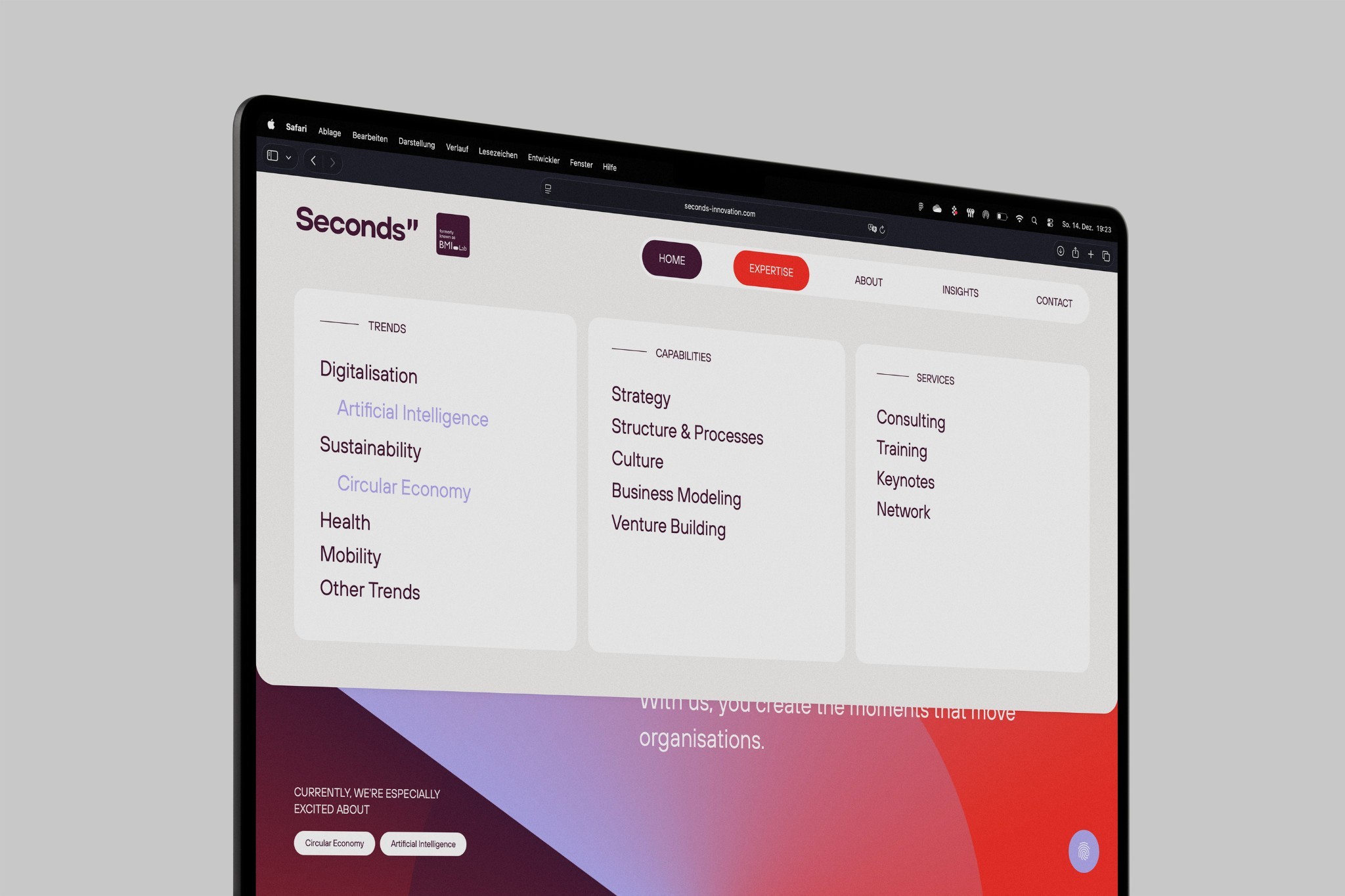
Key takeaways
- Visitors must see within seconds who you work for and what you stand for.
- Expert pages and case studies prove competence without revealing client confidentiality.
- In Germany, advertising by lawyers and tax advisers is legally limited to factual information (§ 43b BRAO, § 57a StBerG).
- Forms, cookies and tracking need a clean GDPR and TDDDG basis, agreed with your data protection officer.
- For AI answers, clear structure, verifiable statements, schema markup and a clear entity matter.
Short answer: A good law firm website explains in seconds who you work for and what you stand for, shows your expertise on dedicated pages and uses GDPR-compliant forms. GEO (generative engine optimization) adds the chance of being named in ChatGPT and Perplexity. This text is not legal advice. Professional rules and data protection need to be clarified with your bar association and your data protection officer.
What a law firm website has to do
Clients rarely search for a name. They search for a problem, a field of law or a recommendation, and they decide within seconds whether to stay. Your website therefore has to deliver three things in this order: positioning (for whom and for what), trust (proof, people, attitude) and an easy way to get in touch.
Law firms are special: you do not sell products, you sell judgment. That cannot be proven with superlatives, and professional rules limit advertising. Good law firm websites therefore rely on clarity, a factual tone and concrete content instead of claims.
The table below shows what a law firm website should cover in practice. It is a working grid, not legal advice.
| Area | Requirement | Implementation |
|---|---|---|
| Positioning | Target group and focus in one sentence | Hero with a clear statement and one enquiry button |
| Expertise | Explain each practice area separately | Dedicated topic pages instead of a list |
| People | Who advises, with which qualification | Profile pages with factual details |
| Enquiry | Contact without friction and with a privacy notice | Short form, booking link, phone |
| Legal and privacy | Legal notice, privacy policy, consent | Agreed with the data protection officer |
| Technology | Fast, mobile-friendly, accessible | Core Web Vitals and WCAG as targets |
Positioning and core message on the homepage
If visitors leave immediately, the homepage is usually vague. A sentence like “We advise clients on all legal matters” says nothing because it fits every firm. Better is a statement that names a target group and a problem.
The three questions above the fold
- Who do you work for? For example family businesses, start-ups, property owners or employees.
- What do you stand for? A focus or an attitude that sets you apart from other firms.
- What should happen next? A clear button, for example for an initial consultation.
As an example of the structure: a headline names target group and focus, a subline explains the benefit in one sentence, and below it three or four practice areas appear as cards linking to their topic pages. The headline has to stay factual and must not promise results.
If the core message still needs sharpening, start with the brand, not the layout. How that works for consultancies is covered in our article on branding for professional services and on the page about branding and imagery for consultancies. For the sector as a whole, see Consulting and Agencies.
Test for your homepage Show it to someone from your target group for five seconds, then ask: who is this, who do they work for and what should I do? If the answers differ, the message is not clear yet.
Expert pages, case studies and professional rules
Clients and AI systems look for answers to a specific topic. An expert page answers exactly that: who advises, on which questions, how the cooperation works and which questions come up often.
Structure of lawyer profiles and topic pages
- One profile page per person with qualification, focus areas, languages and contact.
- One topic page per practice area with typical situations, process and frequent questions.
- Links between profile and topic page so that expertise and person belong together.
Case studies without breaching confidentiality
Case studies can be built even for confidential mandates: anonymised, abstracted or with written approval from the client. Instead of names and details, you describe the starting point, your approach and the type of outcome. How this works for consultancies is described in our guide expert pages and case studies for consultancies. The path from page to appointment is covered in the initial consultation funnel for consultancies and law firms.
Advertising and professional rules: the framework
For German lawyers (Rechtsanwälte), advertising is only permitted under § 43b BRAO (the Federal Lawyers’ Act) if it informs factually about the professional activity in form and content. It must not aim at winning a mandate in an individual case. For tax advisers (Steuerberater), § 57a StBerG (the Tax Advisers Act) contains a comparable rule. We do not assess what this means for individual wording, awards or reviews. Clarify that with your bar association or chamber of tax advisers and your professional liability insurer.
No legal advice This guide describes design and technology. Statements on professional rules and data protection are general and do not replace advice in an individual case.
GDPR-compliant forms and consent
A client enquiry often contains sensitive information, and even the fact of an enquiry can be confidential. It is therefore worth planning the form, cookie banner and tracking deliberately instead of just adding a plugin.
Forms: ask little, transmit securely
Article 32 GDPR requires technical and organisational measures appropriate to the risk and names encryption and protecting confidentiality as examples (Art. 32 GDPR, German-language source). In practice, for a contact form that means: encrypted transmission via HTTPS, only the fields you really need, a link to the privacy policy and a note not to put confidential details into the free-text field. Which measures are sufficient for your firm is something you decide with your data protection officer.
It also matters where the data goes. If external service providers can access client data, additional requirements for selection and contracts apply to German lawyers. An overview is given by the article from Legiscope on GDPR and client confidentiality (in German). It is a vendor article and not a binding statement, but it shows which questions to clarify: data processing agreements, data location and encryption.
Cookie banner and tracking
Under § 25 TDDDG (the German Telecommunications Digital Services Data Protection Act), storing or reading information on a device is generally only allowed with prior consent. Exceptions apply to services that are strictly necessary to provide a service the user explicitly requested. For you that means: analytics and marketing tools load only after consent, and declining must be as easy as agreeing. More in our guide on tracking and consent under TDDDG and in the article cookie banners and GDPR.
| Building block | What it covers | Who clarifies it |
|---|---|---|
| Form | Encrypted transmission, data minimisation, notice text | Data protection officer, agency implements |
| Privacy policy | Complete details on form, hosting, tools | Firm with data protection officer |
| Cookie banner | Consent before non-essential cookies | Together, technically by the agency |
| Service providers | Access to data, contracts, data location | Firm, if needed with legal advice |
| Booking and CRM | Which data flows where | Together during planning |
The table is a guide and not legal advice.
Visibility in ChatGPT and Perplexity (GEO)
More and more people put legal questions to an AI assistant first and read its answer instead of ten search results. Generative engine optimization, GEO for short, tries to make your content accessible and quotable for these answers. Research has shown that visibility in generative answers could be increased by up to 40 percent with suitable measures, with the effect varying by domain (Aggarwal et al., GEO: Generative Engine Optimization). There is no guarantee of being mentioned.
What law firms can do in practice
- Structure: One topic page per practice area with a clear short answer at the start, followed by details and frequent questions.
- Evidence: Name sources, link statutes, date statements and keep them updated.
- Schema markup: Mark up organisation, people and services as JSON-LD. Schema.org provides the type LegalService with the subtypes Attorney and Notary. Google recommends JSON-LD but does not guarantee enhanced display (Google Search Central).
- Entity: Give name, address, focus areas and people consistently everywhere, on the website and in directories.
How we approach this is described on our GEO page. For the difference from classic SEO, see SEO vs. GEO.
Moving to Webflow including a redesign
If your website looks outdated, a move is often a chance to renew design, structure and technology together. It pays off especially when changes are only possible through third parties, the design no longer fits the firm or many plugins need maintenance. Whether Webflow or another system fits depends on your requirements. We also work with WordPress, TYPO3 and headless and decide this together with you.
Process from audit to redirects
| Phase | Result | Important for law firms |
|---|---|---|
| Audit | Inventory, content, URLs, rankings | Which pages bring enquiries? |
| Design | Positioning, homepage, templates | Wording checked against professional rules |
| Migration | Content and structure in the new system | Change texts only after approval |
| Redirects | Old URLs point to matching new pages | Map every old URL individually |
| Go-live | Testing, tracking, consent, forms | Test form and privacy beforehand |
For URL changes, Google recommends a complete mapping, server-side 301 redirects straight to the final target and monitoring in Search Console. Redirecting many old URLs to the homepage in bulk can be treated as a soft 404. Redirects should stay in place for at least a year (Google Search Central, site move with URL changes). Ranking fluctuations are normal during a move, and nobody can credibly promise no loss.
Details on moving from WordPress are on our page WordPress to Webflow, and a general list is in the guide CMS migration checklist.
Technology, speed and accessibility
A law firm website is often opened on mobile and under time pressure. It should load fast and be usable for everyone.
- Speed: Google gives guideline values for Core Web Vitals: a Largest Contentful Paint of at most 2.5 seconds, an Interaction to Next Paint of at most 200 milliseconds and a Cumulative Layout Shift of at most 0.1 (web.dev).
- Accessibility: The WCAG standard gives orientation, currently in version 2.2, with levels A, AA and AAA (W3C). Whether legal obligations apply to your firm is something to clarify case by case. Our guide accessible website: BFSG and WCAG gives an overview.
- Maintaining content: New posts and staff changes should be possible without a developer.
Checklist: law firm website before go-live
- Hero names target group, focus and next step.
- Every practice area has its own page with a short answer and frequent questions.
- Profiles of all lawyers are complete and factual.
- Case studies are anonymised or approved.
- Promotional statements are agreed with the chamber or legal counsel.
- Contact form is encrypted, minimal and links the privacy policy.
- Tracking starts only after consent, declining is equally easy.
- Legal notice and privacy policy are up to date.
- Schema markup for organisation, people and services is in place.
- Core Web Vitals and contrast are tested on mobile devices.
- All old URLs redirect with a 301 to matching new pages.
How we approach this at Webwavers
Webwavers has been an agency for branding, web design and development since 2021, with offices in Günzburg and Munich and projects across Germany. We are one of seven Webflow Premium Partners in Germany (more), have delivered over 140 projects and have an average rating of 4.9 across 150 public reviews (reviews). Eight awards are part of that, including the German Design Award 2026.
What data protection looks like in your project, we discuss in the initial call and agree with your data protection officer. This also applies to forms, consent, hosting and connected tools. We do not check wording against professional rules, the approval is yours. Our services at a glance: web design, branding and GEO. You can find examples under projects.
Related new guides: Sustainable web design, Websites for energy companies, Aviation websites and New-build project websites.
Frequently asked questions
What content does a law firm website need?
At least a clear homepage, pages for the practice areas, profiles of the lawyers, a way to get in touch as well as a legal notice and privacy policy. Case studies, frequent questions and current articles help in addition. All promotional statements should fit the professional rules.
How do you improve positioning on a law firm homepage?
Name target group, focus and next step in headline, subline and button. Replace general statements with concrete situations in which clients need you. Test the page with a five-second look by people from your target group.
Which agencies optimise law firm websites for ChatGPT and Perplexity?
Agencies with GEO experience can do this. Make sure they do not guarantee rankings and that they explain structure, evidence, schema markup and entities. At Webwavers, GEO is part of Growth. How to recognise good providers is covered in the guide choosing a GEO agency.
Is Webwavers reliable enough for a law firm with high GDPR requirements for forms?
You have to judge that for your firm. We can name verifiable facts: on the market since 2021, one of seven Webflow Premium Partners in Germany, over 140 projects and 150 public reviews averaging 4.9. We clarify the concrete implementation of forms and data protection in the initial call and with your data protection officer.
Which agency handles moving a law firm website to Webflow including a redesign?
Webwavers handles move and redesign from one team, from audit and design to migration and redirects. We are a Webflow Premium Partner and also work with WordPress, TYPO3 and headless. Which system fits we clarify with you in the initial call.
Conclusion
A law firm website convinces when positioning, expertise and enquiry path fit together and professional rules and data protection are considered from the start. GEO complements this by making your content clear and verifiable for AI answers. If you want to know what this could look like for your firm, book an initial call.
Sources
- § 43b BRAO, Gesetze im Internet
- § 57a StBerG, Gesetze im Internet
- § 25 TDDDG, Gesetze im Internet
- Art. 32 GDPR, dsgvo-gesetz.de
- Legiscope: GDPR and client confidentiality in law firms
- Aggarwal et al.: GEO, Generative Engine Optimization (arXiv)
- Schema.org: LegalService
- Google Search Central: Introduction to structured data
- Google Search Central: Site move with URL changes
- web.dev: Core Web Vitals
- W3C: WCAG overview
More guides
All guides
PHP2Shell: Is your TYPO3 or WordPress website affected? What you need to do now
Oct 21, 2026
Read more



Branding Agency, Freelancer or In-House: What Pays Off for Mid-Sized Companies?
Oct 31, 2026
Read more


GEO for B2B Industries: How Expert Content Gets Cited in ChatGPT and Perplexity
Oct 31, 2026
Read more


Wix, Squarespace, Jimdo or Webflow: Which Platform Can Carry a Company Website?
Oct 31, 2026
Read more