How much does a B2B website cost in 2026?


Key takeaways
- Depending on scope, a professional B2B website costs between 8,000 and 60,000 euros. The range comes from content and features, not from design.
- Four factors drive the price: the number of page types, the level of customization, who writes the copy, and technical special cases.
- Ongoing costs are regularly forgotten and often make up a third of the total over three years.
- A fixed price without follow-up questions is not a good sign. If you don't know how many page types there are, you can't name a reliable price.
Why price answers are evasive and what really counts
If you ask about the price of a website, you usually get "it depends". That is even true, but it doesn't help anyone. Because it depends on a manageable number of things, and they can be named.
The reason for the reluctance is a different one: a number without context becomes the benchmark everything is measured against. 15,000 euros sounds like a lot when there is a quote for 3,000 euros next to it, and like little when it covers twenty pages, fifty texts and a migration.
That is why you will find both here: the ranges and the factors that place you within those ranges. By the end of this article, you should be able to read a quote and judge whether it is realistically calculated.
The realistic price ranges
Small B2B website, 5 to 8 pages, content from the client: 8,000 to 15,000 euros. Custom design based on a clear concept, optimized for mobile, content can be maintained via a CMS. The typical scope for service providers, law firms and smaller companies.
Medium-sized company website, 12 to 25 pages, partial content support: 18,000 to 35,000 euros. Several service pages, a case studies section, a blog or knowledge section, a clean structure for search engines. Most relaunches in the upper mid-market fall into this range.
Large website with special features: from 40,000 euros. Multilingual content, integration with existing systems, extensive data sets, configurators or custom calculation logic.
These ranges apply to agencies with their own concept, design and development. Freelancers are below that, large network agencies significantly above.
The sentence that makes the decision easier
If you ask about the price of a website, you usually get "it depends". That is even true, but it doesn't help anyone. Because it depends on a manageable number of things, and they can be named.
The reason for the reluctance is a different one: a number without context becomes the benchmark everything is measured against. 15,000 euros sounds like a lot when there is a quote for 3,000 euros next to it, and like little when it covers twenty pages, fifty texts and a migration.
That is why you will find both here: the ranges and the factors that place you within those ranges. By the end of this article, you should be able to read a quote and judge whether it is realistically calculated.
The realistic price ranges
Small B2B website, 5 to 8 pages, content from the client: 8,000 to 15,000 euros. Custom design based on a clear concept, optimized for mobile, content can be maintained via a CMS. The typical scope for service providers, law firms and smaller companies.
Medium-sized company website, 12 to 25 pages, partial content support: 18,000 to 35,000 euros. Several service pages, a case studies section, a blog or knowledge section, a clean structure for search engines. Most relaunches in the upper mid-market fall into this range.
Large website with special features: from 40,000 euros. Multilingual content, integration with existing systems, extensive data sets, configurators or custom calculation logic.
These ranges apply to agencies with their own concept, design and development. Freelancers are below that, large network agencies significantly above.
Driver 1: page types, not page count
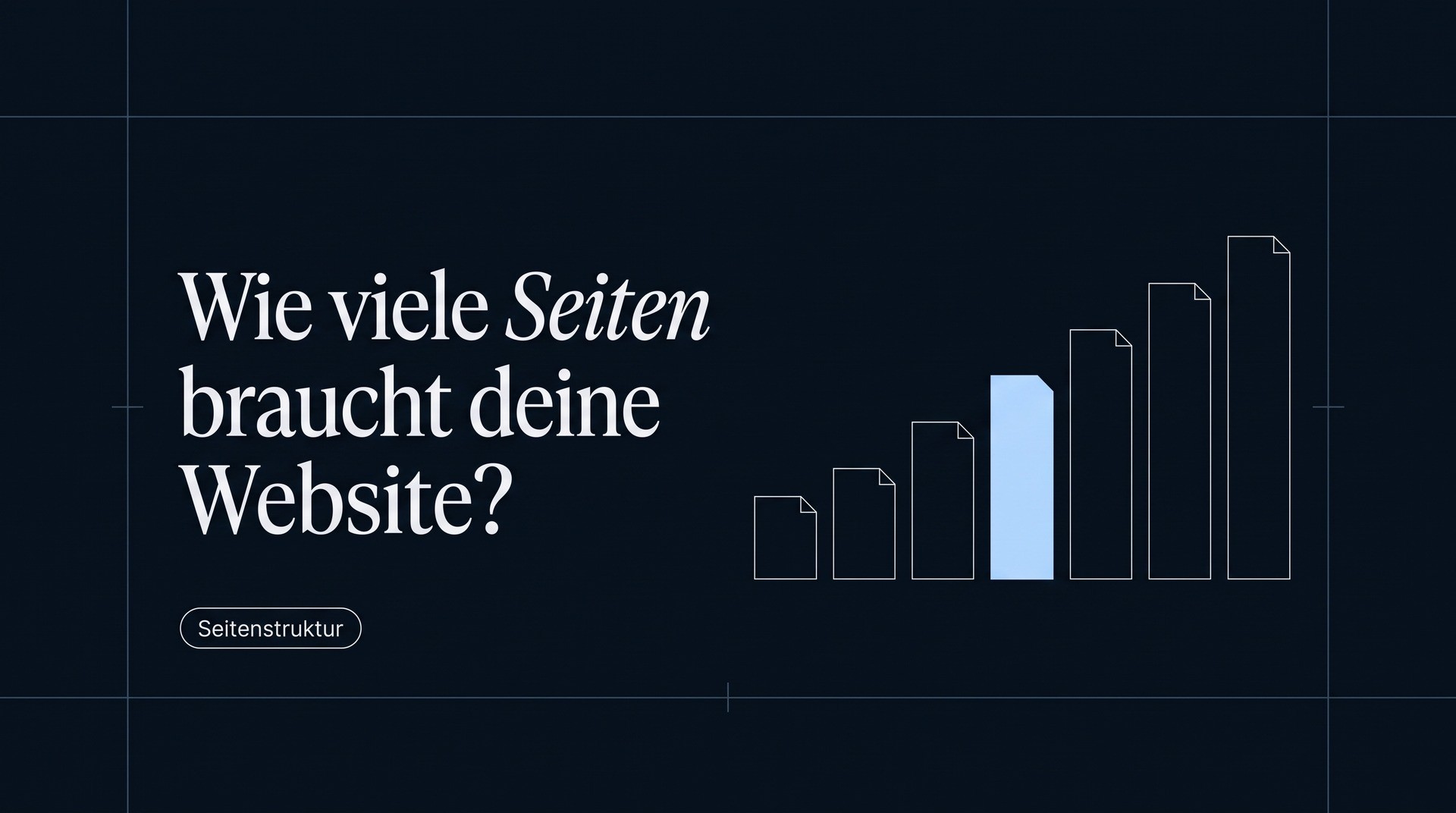
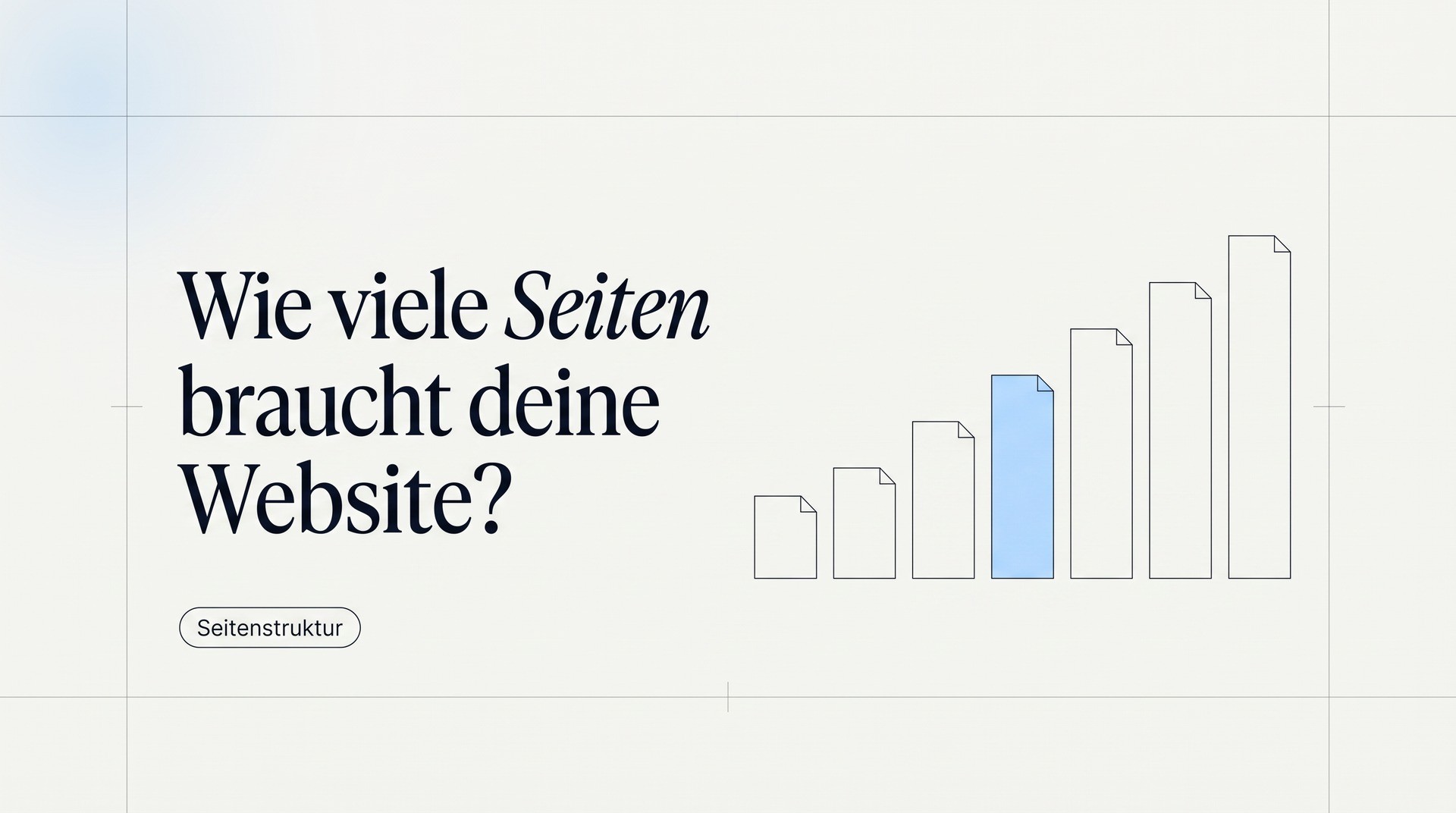
Not every page costs the same. What matters is how many different page types there are. Twenty case study pages following one pattern are much cheaper than five pages that are all structured differently.
The logic behind it: every new page type means concept, design, build and testing. Every additional page of the same type only means content entry. So the first case study entry costs many times more than the twentieth.
A typical B2B website gets by with five to seven page types: homepage, service page, case studies overview, case study detail, about us, contact, blog article. If you go beyond that, you should have a clear reason for every additional type.
What this means in practice: If you want to cut costs, don't reduce the number of pages, reduce the number of patterns. And invest early in a clean structure, because that is where the most money is at stake later on.
Driver 2: who writes the copy
The item that pushes quotes furthest apart, and the one that is least often clearly settled in conversations.
If the content comes entirely from the client, a considerable part of the effort falls away. If it comes from the agency, a well-crafted page of copy costs between 300 and 900 euros depending on the depth of research. For twenty pages, that is 6,000 to 18,000 euros, often more than the entire design.
This is exactly where the seemingly inexplicable differences between two quotes for the same project come from. One assumes content from the client, the other doesn't. Both are correctly calculated, just for different projects.
The honest recommendation: have subject-matter content written internally, structure and polish externally. Nobody knows your services better than you. And nobody knows better than an agency in which order this content needs to appear on a page.
What is often underestimated: the internal option costs too, just in working hours instead of an invoice. Expect two to four hours per page, including coordination.
Driver 3: customization
Adapting a template costs a fraction of a custom design. That is legitimate and right for many companies, you just need to know what you are buying.
With a template, you get a working layout that thousands of others use too. For a locally active service provider whose customers come through referrals, that is usually enough. For a company whose positioning is defined by perception and price level, it works against the business model.
So the question is not "template or custom", but: How much of your positioning runs through perception? If the answer is "not much", this is the right place to save.
Rough order of magnitude: adapting a template 1,500 to 4,000 euros. Custom design for five to seven page types 6,000 to 15,000 euros. The difference lies in the concept, design rounds and everything that doesn't look standard.
Driver 4: technology and special cases
Anything that goes beyond an informational website costs extra, and usually more than expected. The four most common items:
Multilingual content: a 30 to 50 percent surcharge. Not because of the technology, but because every page has to be maintained twice, also after launch. If you plan two languages, you should factor in ongoing maintenance right away.
Integration with existing systems: 2,000 to 15,000 euros. CRM, ERP, booking systems, product databases. The range depends almost entirely on whether the target system has a usable interface.
Migrating large amounts of content: from 1,500 euros. Significantly more for a blog with 200 posts and an inconsistent structure. Here it pays to clear things out first instead of carrying everything over.
Accessibility under the BFSG: a 10 to 20 percent surcharge if it is considered from the start. Significantly more if added afterwards. For many companies, this has no longer been optional since 2025.
These items belong in the briefing, not in a supplementary quote.
The costs missing from the quote
Almost every quote describes the build. Hardly any describe the operation. Over three years, however, operation often makes up a third of the total costs.
Hosting: 15 to 150 euros per month. Depending on the system and visitor numbers. With hosted website builders it is included in the subscription, with self-hosted systems it comes on top.
Maintenance and updates: 50 to 300 euros per month. For systems with extensions, this is not optional but mandatory: a system that isn't updated is a security risk.
Content maintenance: based on effort. Either internally as working time or externally at 90 to 150 euros per hour. If you don't plan for this, you will have an outdated website again in two years.
Further development: 2,000 to 8,000 euros per year. New service pages, additional case studies, seasonal adjustments. A website that is never developed further gradually loses visibility.
Factor these four items into every quote before you compare. Otherwise, you are not comparing two websites, but two invoices of varying completeness.


More articles